
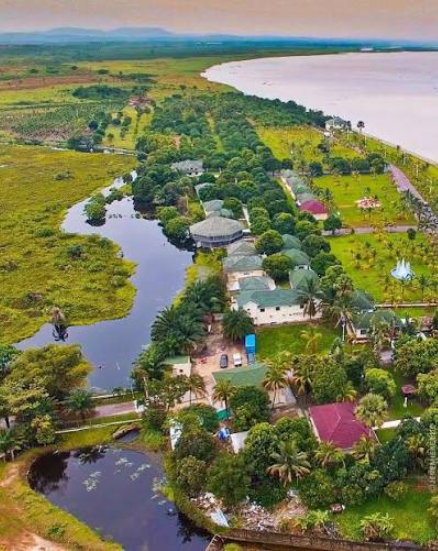

There is a moment, somewhere deep inside the safari in Congo Basin, when the noise of the modern world falls completely away. The satellite phone has no signal. The nearest road is two days behind you. Above your head, a canopy of ancient trees filters the equatorial light into something green and cathedral-like, and in the silence between your own footsteps, you hear the forest breathing.
This is the Congo safari — and it is unlike anything else that calls itself by that name.
While the word “safari” has become synonymous with open jeeps rolling across golden grasslands, the Congo offers something older, stranger, and in many ways more profound: a walking journey through the world’s second-largest tropical rainforest, in the company of species that exist nowhere else on Earth. Here, wildlife is not observed from a comfortable distance — it is encountered face to face, on its own terms, inside its own world.
Stretching across the Democratic Republic of Congo (DRC) and the Republic of Congo (Congo-Brazzaville), the Congo Basin spans approximately 3.7 million square kilometers. It is the lungs of Africa, a carbon sink of global importance, and the last refuge of the mountain gorilla, the bonobo, the forest elephant, and the enigmatic okapi. For the traveler willing to engage with its demands, a safari in Congo delivers experiences so rare and so viscerally powerful that they reframe everything that came before.
This is a guide to doing it right.
Why a Congo Safari Is Different
Most African safaris are built around the vehicle. You sit elevated above the landscape, binoculars raised, scanning the middle distance for movement. It is wonderful — but it keeps you at arm’s length from the wilderness.
A safaris in Kenya and Congo removes that distance entirely.
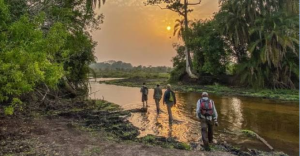
Because the terrain is equatorial rainforest rather than open savanna, almost all wildlife encounters happen on foot. You follow a tracker through undergrowth that closes behind you like a curtain, reading bent branches and knuckle prints in soft mud, listening for the low rumble of distant gorillas. When contact is made, you are standing in the animal’s living room — not observing it through a windshield from a gravel road.
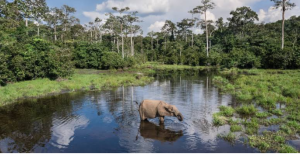
This changes everything about the experience. It demands patience, physical engagement, and a different quality of attention. It rewards those qualities with encounters of extraordinary intimacy. A silverback gorilla who has been habituated to human presence over years will sit within three meters of you, regarding you with calm, intelligent eyes, while his family moves and feeds around him. Bonobos will swing through the branches directly overhead. A forest elephant, appearing silently from the trees at a forest clearing, will pause to look at you before moving unhurriedly on.
The Congo is also one of the last places on Earth where you can have these encounters away from crowds. Visitor numbers are a fraction of those at comparable East African destinations, and the strict permitting systems at major parks ensure that each experience remains genuinely exclusive.
The Crown Jewels: Key Safari Parks and Reserves
Virunga National Park, DRC
Virunga is Africa’s oldest national park, established in 1925, and its most biodiverse. Spanning nearly 8,000 square kilometers along the Albertine Rift in eastern DRC, it encompasses active volcanoes, glaciated peaks, equatorial forest, and open savanna — a range of habitats found in few places on Earth.
The park’s signature experience is mountain gorilla trekking. Fewer than 1,100 mountain gorillas remain in existence, all of them in the Virunga Massif and Uganda’s Bwindi Impenetrable Forest. Trekking permits are strictly capped at eight visitors per habituated gorilla family per day, making each experience genuinely rare. Treks begin at dawn from ranger stations and can range from a one-hour walk to a full day through steep volcanic forest. The hour permitted in the gorillas’ presence is — without exception — described by those who experience it as among the most powerful wildlife encounters of their lives.
Virunga also offers chimpanzee habituation experiences, guided walks with habituated hippo pods along the Rwindi River, and the extraordinary Mount Nyiragongo volcano trek — a two-day ascent culminating in a night camped at the rim of one of the world’s largest active lava lakes, watching rivers of molten rock far below.
The park’s ranger force — the largest and most decorated in Africa — works under conditions of real personal danger to protect both wildlife and visitors, and their dedication is the reason Virunga’s wildlife has survived decades of regional conflict.
Odzala-Kokoua National Park, Republic of Congo
Situated in the remote northwest of Congo-Brazzaville, Odzala-Kokoua is the jewel of the Republic of Congo’s protected area network. Covering 13,500 square kilometers of primary lowland rainforest, it is one of the oldest protected areas in Africa and home to one of the continent’s densest populations of western lowland gorillas.
The park’s defining feature is its network of bays — natural forest clearings flooded with mineral-rich water and mud that attract extraordinary concentrations of wildlife. From elevated, concealed observation platforms at bais such as Lango and Mboko, visitors watch forest elephants, western lowland gorillas, forest buffalo, sitatunga, and bongo converge simultaneously — an open-air theater of wildlife behavior without parallel anywhere in Africa.
Guided gorilla tracking walks are conducted daily from two intimate luxury camps. The trackers — local Congolese men with decades of experience reading forest signs — lead small groups through primary forest to locate habituated gorilla families. Encounters are managed with the same rigorous protocols as in the DRC: limited group sizes, mandatory distances, and strict health screening.
Nouabalé-Ndoki National Park, Republic of Congo
A UNESCO World Heritage Site and one of the most pristine forest ecosystems remaining on Earth, Nouabalé-Ndoki has been the subject of continuous scientific research since the 1980s. Its interior forests were so remote that the first researchers to enter found gorillas and elephants that showed no fear of humans whatsoever — having had no previous contact with our species.
The park is managed in partnership with the Wildlife Conservation Society and offers safari experiences of exceptional scientific depth. Guided walks to bais, researcher-accompanied forest treks, and night walks reveal a forest alive with extraordinary biodiversity. The park’s Congo peafowl — the DRC’s only endemic bird species, first described to science in 1936 — is among the most sought-after bird sightings in Africa.
Salonga National Park, DRC
The largest tropical forest and Bwindi forest national park in Africa and a UNESCO World Heritage Site, Salonga covers nearly 36,000 square kilometers in the heart of the Congo Basin, accessible only by river or light aircraft. Its remoteness has protected it from the pressures that have degraded forests elsewhere, and it shelters the world’s most significant population of bonobos.
Bonobos — known to share approximately 98.7 percent of human DNA — are found only in the DRC, living exclusively south of the Congo River. Bonobo trekking experiences in Salonga, conducted through specialist operators working with local research teams, are among the most exclusive and intellectually stimulating wildlife encounters available anywhere in the world.
Wildlife You Will Encounter
A Congo safari puts travelers in the presence of species that exist nowhere else:
Mountain Gorillas live only in the Virunga Massif and Bwindi. Seeing them is one of the rarest and most regulated wildlife encounters in Africa — and the most unforgettable.
Western Lowland Gorillas inhabit the forests of the Republic of Congo and surrounding countries. Larger populations make for more reliable sightings, and bai-based observations reveal complex social dynamics rarely witnessed elsewhere.
Bonobos, the Congo’s most emblematic species, are peaceful, intelligent, and matriarchal — a counterpoint to everything the world assumes about great apes. Their resemblance to early human ancestors makes every encounter feel like a mirror held up to our own past.
Forest Elephants are genetically distinct from savanna elephants: smaller, darker, and straighter-tusked, adapted to forest life. They are seed dispersers of critical ecological importance and are increasingly endangered.
Okapis, the Congo’s most mysterious large mammal, are found only in the DRC’s Ituri Forest. Resembling a cross between a giraffe and a zebra, they were unknown to Western science until 1901. A wild sighting remains among Africa’s rarest wildlife experiences.
African Forest Buffalos, forest leopards, golden cats, giant forest hogs, and over 700 bird species round out a wildlife list of staggering richness.
Planning Your Congo Safari
When to Visit
The primary dry season runs from June through September, when trails are most navigable, bays are at their most productive, and gorilla tracking success rates peak. A secondary dry window runs from December through February. The wet seasons (October–November and March–May) offer exceptional birdwatching but challenging access.
Health and Medical Preparation
Yellow fever vaccination is mandatory. Malaria prophylaxis is essential throughout. Consult a travel medicine specialist at least six to eight weeks before departure for a full health preparation schedule. Comprehensive travel and medical evacuation insurance is non-negotiable for remote forest areas.
Choosing the Right Operator
Quality of operator is the single most important variable in a Congo safari. Choose companies with verifiable long-term relationships with park authorities, research institutions, and local communities. The best operators employ local guides and trackers exclusively, contribute directly to conservation funds, and maintain transparent booking and permit processes.
Key Takeaways
- A safari in Congo is a walking, immersive experience through primary rainforest — fundamentally different from vehicle-based East African safari in Tanzania and Congo, and more intimate than almost anything else in African wildlife travel.
- Four great ape species — mountain gorillas, western lowland gorillas, chimpanzees, and bonobos — are all accessible in the Congo. No other region on Earth offers this.
- Forest baits are the Congo’s unique wildlife spectacle: natural clearings where gorillas, elephants, and buffalo congregate in extraordinary numbers, viewable from concealed platforms at close range.
- Visitor numbers are low and permits strictly controlled, making Congo safaris genuinely exclusive in a way that major East African destinations can no longer offer.
- Conservation fees fund survival: permit revenues pay ranger salaries and anti-poaching operations. Visiting responsibly is an act of direct conservation support.
- Plan early and plan thoroughly: permits sell out months in advance, visas require lead time, and remote destinations demand meticulous logistics. Use a specialist operator with proven Congo experience.
Questions & Answers
Q: What fitness level is required for a Congo safari? A: A moderate to good level of fitness is recommended. Forest treks involve walking on uneven, often muddy and steep terrain for several hours. Gorilla trekking in Virunga can be particularly demanding due to the volcanic landscape. Participants should be comfortable with sustained uphill walking. There is a minimum age of 15 for gorilla trekking; there is no maximum age, though medical fitness is essential.
Q: How far in advance should I book a Congo safari? A: For peak season (June–September), booking 9 to 12 months in advance is strongly recommended, particularly for gorilla trekking permits, which are limited and sell out early. Visa applications for both the DRC and Congo-Brazzaville should be initiated at least 8 to 12 weeks before departure.
Q: Are Congo safaris safe? A: Established safari parks — Virunga, Odzala-Kokoua, and Nouabalé-Ndoki — operate with experienced ranger escorts and proven security protocols. Virunga has significantly improved its security infrastructure in recent years. Eastern DRC outside designated tourism zones remains subject to instability, and travelers must review current government travel advisories carefully. Always travel with a reputable, licensed operator who maintains current security intelligence.
Q: What is the carbon footprint of a Congo safari, and is it responsible? A: Long-haul flights contribute significantly to travel emissions, and Congo safaris often require additional internal charter flights. Responsible travelers should offset emissions through verified carbon offset programs. More significantly, the fees paid for gorilla permits and park entrance directly fund the conservation of ecosystems that sequester carbon on a global scale. Well-managed Congo tourism is among the highest-impact forms of conservation travel.
Q: Can families with children visit the Congo for a safari? A: The minimum age for gorilla trekking is 15 years. For families with older teenagers, a Congo safari can be a profound and educational experience. Odzala-Kokoua’s bai-based wildlife viewing is less physically demanding than gorilla trekking and suitable for a wider age range. Families should consult their operator carefully about age-appropriate activities and health considerations for younger travelers.
Q: What camera equipment is recommended for a Congo forest safari? A: Forest photography requires specific gear. A versatile zoom lens (such as a 100–400mm or 200–600mm) handles wildlife encounters at variable distances. A wide-angle lens captures the grandeur of forest interiors. High ISO performance is critical as forest light is low and artificial flash is prohibited near wildlife. A waterproof camera bag and lens cloths are essential. Video capability in low light is valuable for capturing gorilla safari Rwanda and bonobo behavior.
Conclusion
A safari in Congo is not a product to be consumed. It is a relationship to be entered into — with a landscape of almost incomprehensible biological richness, with communities whose futures are bound to the forest’s survival, and with species whose continued existence depends, in part, on whether the world chooses to value them.
The gorilla trekking Uganda that holds your gaze on a misty Virunga morning has survived war, disease, and the relentless pressure of a growing human population. The bonobo family moving through Salonga’s canopy exists in a forest that has stood for millions of years and could be cleared in a generation. The forest elephant crossing the bai at Odzala is a living seed disperser keeping the forest alive around it.
When you walk into these forests as a responsible traveler, you bring resources, attention, and advocacy. The fees you pay keep rangers employed and poachers out. The stories you bring home shape how the world understands what the Congo is and why it matters. Every thoughtful visitor is a voice for the place they have chosen to enter.
The safari in Congo is not difficult. It is logistically demanding, physically challenging, and emotionally intense. It is also the closest thing left on Earth to the world as it was before we changed everything. Go carefully, go humbly, and go — because experiences this real, in places this alive, are becoming rarer every year.